• Home
  • Suggest A DIY
  • DIY Newsletter

Cross-Stitch

Charts, patterns and everything needlepoint

  • About CraftGossip
  • Our Network
    • Bath & Body Crafts
    • Candle Making Ideas
    • Crochet Ideas
    • Cross Stitch
    • Edible Crafts
    • Felting Patterns
    • Glass Art
    • Home & Garden Ideas
    • Indie Crafts
    • Jewelry Making
    • Kids Crafts
    • Knitting Patterns
    • Lesson Plans
    • Needlework
    • Party Ideas
    • Polymer Clay
    • Quilting Ideas
    • Recycled Crafts
    • Scrapbooking
    • Sewing Patterns
    • Card Making
    • DIY Weddings
    • Not Craft Ideas
  • Giveaways
  • Roundups
  • Store
  • Search

Cross Stitch Project Bags: Storage Ideas to Keep Your WIPs Organized

June 17, 2026 by Sarah White

Cross stitch project bags aren’t a necessity, but if you’re traveling with a work-in-progress, or just want to keep your fabric, floss and notions clean and corralled away from kids or pets, the right project bag makes a real difference.

Project bags are not a necessity when it comes to cross stitch, or any other craft. But if you’re traveling with your cross stitch, or you want to keep things clean/organized/away from kids or pets, using project bags is a great idea. 

Of course any kind of bag can be a project bag, from a zip top bag to a reusable shopping bag. I like to use the plastic zipper bags that sheets come in as project bags, especially for longer term storage of projects in hibernation because it keeps them clean and dust free but also allows me to see what’s in there. 

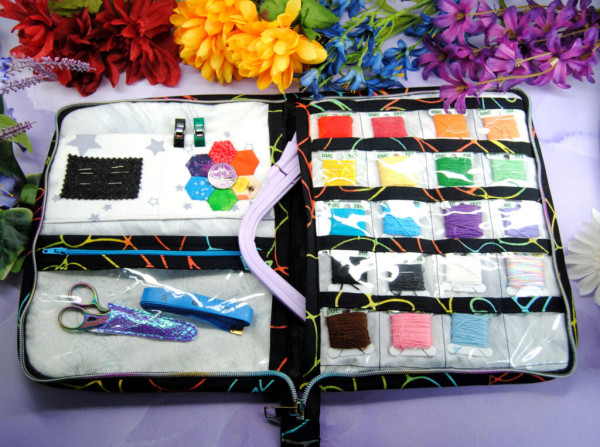
Sirious Stitches has a very comprehensive post covering various options that they and other people in their community use for project bags and storage. 

Probably the best thing about it is as it goes through the different kinds of bags there are links to tutorials if you want to make your own (because we’re mostly all multi-crafters, right?) and also places that you can buy bags if you’d rather go that route. You’ll find projects for a clear vinyl pencil pouch perfect for storing bobbined thread, large square pouches, vinyl square pouches, flat bottom pouches with zippers, folio cases with large pockets, bobbin pockets and multi-fold cases. 

The point of all that research was that Siri wanted a new project bag, so you can click through to see not only all of these project options but what they ultimately made and how it’s working. It’s a really lovely project bag that makes me a little jealous on behalf of my projects that mostly just sit on my desk (or in a plastic shopping bag, ugh) while I’m working on them. 

Do you have a favorite project bag? I’d love to hear about it. And be sure to check out the post at Sirious Stitches. 

[Photo: Sirious Stiches]
«
»

Have you read?

Everything You Need to Know about French Knots and Cross Stitch

I feel like I’ve written a lot about French knots, probably because they are one of those things that’s pretty common in cross stitch but also that give some stitchers problems. So let’s take another look at how to make French knots and why you might be having trouble. 

This information comes from a great blog post from Caterpillar Cross Stitch, which notes that a lot of the success of your French knots depends on what you do before you actually make the knot. 

It talks about what kinds of needles are best for making French knots (hint: not regular embroidery needles because the eye is bigger than the shaft of the needle, which makes it hard to get even tension), what other supplies you’ll need and how to cut your thread to make it easier. 

It also covers how to actually go about making a French knot and some of the problems you might encounter along the way and how to fix them. This is things like your knots ending up on the back of your work, sizing issues, tension issues, having trouble pulling the thread through and more. 

You’ll also find a discussion of the colonial knot as an alternative to the French knot (I’ve written about that one, too), which some stitchers find easier and it looks virtually the same as a French knot. And if you want to avoid knots altogether there are also some ideas for what to use instead. 

Check out their post at Caterpillar Cross Stitch, and you’ll probably learn some things you didn’t know about French knots. 

Pair it with my post at Our Daily Craft all about French knots, which is a little bit more about embroidery than cross stitch, but does have a handy chart showing knots of different twist numbers made with different numbers of thread, which I at least think is interesting. 

[Photo: Caterpillar Cross Stitch]

Categories

Book Reviews Christmas Craft Businesses Craft Inspirations Craft News and Events Cross-Stitch Patterns & Charts Cross-Stitch Product Reviews Cross-Stitch Website Reviews Dogs & Cats Easter flowers Free Patterns Halloween More Cross Stitch Product Reviews spring Subversive Thanksgiving Tutorials and Patterns valentines day

RSS More Articles

  • Easy Crochet Projects That Start With A Magic Loop
  • Chicken Coasters To Crochet For Farmhouse Kitchens, Easter Tables And Handmade Gifts
  • Red Panda Crochet Patterns For Cute Woodland Amigurumi Projects
  • How to Make a Tri-Fold Castle Card
  • Everything You Need to Know about French Knots and Cross Stitch
  • Book Review Wednesday: Bead Jewelry Making For Beginners
  • Book Review Wednesday: Polymer Clay Jewelry
  • Knit a Pastel Plaid Sweater
  • 12 Scrapbookers You Should be Following on Instagram (where are all the blogs? pt. 2)
  • Shadow Knitting And Illusion Knitting Shawl Patterns With Hidden Designs

Pick Your Blog

  • Sewing
  • Knitting
  • Quilting
  • Crochet
  • Home & Garden
  • Recycled Crafts
  • Scrapbooking
  • Card Making
  • Polymer Clay
  • Cross-Stitch
  • Edible Crafts
  • Felting
  • Glass Art
  • Indie Crafts
  • Kids Crafts
  • Jewelry Making
  • Lesson Plans
  • Needlework
  • Bath & Body
  • Party Ideas
  • Candle Making
  • DIY Weddings
  • Not Craft
  • Free Craft Projects

Copyright © 2026 · CraftGossip | Start Here | Contact Us | Link to Us | Your Editors | Privacy and affiliate policy