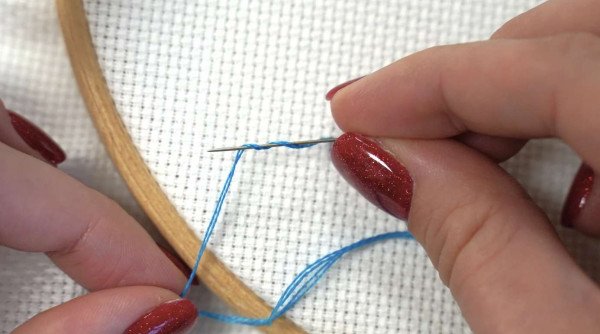
I feel like I’ve written a lot about French knots, probably because they are one of those things that’s pretty common in cross stitch but also that give some stitchers problems. So let’s take another look at how to make French knots and why you might be having trouble.
This information comes from a great blog post from Caterpillar Cross Stitch, which notes that a lot of the success of your French knots depends on what you do before you actually make the knot.
It talks about what kinds of needles are best for making French knots (hint: not regular embroidery needles because the eye is bigger than the shaft of the needle, which makes it hard to get even tension), what other supplies you’ll need and how to cut your thread to make it easier.
It also covers how to actually go about making a French knot and some of the problems you might encounter along the way and how to fix them. This is things like your knots ending up on the back of your work, sizing issues, tension issues, having trouble pulling the thread through and more.
You’ll also find a discussion of the colonial knot as an alternative to the French knot (I’ve written about that one, too), which some stitchers find easier and it looks virtually the same as a French knot. And if you want to avoid knots altogether there are also some ideas for what to use instead.
Check out their post at Caterpillar Cross Stitch, and you’ll probably learn some things you didn’t know about French knots.
Pair it with my post at Our Daily Craft all about French knots, which is a little bit more about embroidery than cross stitch, but does have a handy chart showing knots of different twist numbers made with different numbers of thread, which I at least think is interesting.
[Photo: Caterpillar Cross Stitch]