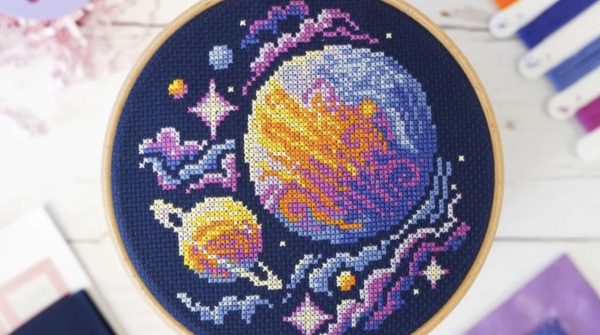
 Do you know the term confetti stitch when it comes to cross stitch? This is a term that is used for when there are single stitches scattered around the canvas. It’s often used for things like a sky full of stars or snow falling on a scene.
It looks great but it can be intimidating because there’s nowhere to hide your thread ends when you have stitches that are isolated from all the other stitches on the project. You don’t want to use one long thread and just hop around to where all the stitches are, because the thread might show through or get in the way when you need to stitch other stitches. Not to mention its probably a waste of thread.
So what do you do? How you can both hide and secure the ends of your thread to make individual stitches and last?
Caterpillar Cross Stitch has an amazing blog post that covers all the options you have when working individual stitches of a color (you can also use these when single stitches of a color appear within the main design rather than isolated.
There are options here for when you are using odd or even numbers of threads, and ones that work better on different kinds of cross stitch fabric. I’m mostly familiar with the loop method, where you make a loop with the tail of your thread and use that to secure the thread end, but there are several other options explored here, too.
It also explains which techniques are best for different types of projects, when you might want to work the confetti stitches first in a project and when to work them last, thread conservation techniques and more. This is basically everything you need to know about working single cross stitches in a project and I should just stop talking about it so you can head to Caterpillar Cross Stitch and check it our for yourself.
[Photo: Caterpillar Cross Stitch]