• Home
  • Suggest A DIY
  • DIY Newsletter

Cross-Stitch

Charts, patterns and everything needlepoint

  • About CraftGossip
  • Our Network
    • Bath & Body Crafts
    • Candle Making Ideas
    • Crochet Ideas
    • Cross Stitch
    • Edible Crafts
    • Felting Patterns
    • Glass Art
    • Home & Garden Ideas
    • Indie Crafts
    • Jewelry Making
    • Kids Crafts
    • Knitting Patterns
    • Lesson Plans
    • Needlework
    • Party Ideas
    • Polymer Clay
    • Quilting Ideas
    • Recycled Crafts
    • Scrapbooking
    • Sewing Patterns
    • Card Making
    • DIY Weddings
    • Not Craft Ideas
  • Giveaways
  • Roundups
  • Store
  • Search

Types of Cross Stitch Needles: Which Size and Style to Use

May 28, 2026 by Sarah White

Most stitchers grab whatever needle is handy, but cross stitch needles actually come in different types and sizes — and knowing the difference between regular and petite tapestry needles can save your fabric from stretched, distorted holes.

I will admit that when I want to do a cross stitch pattern, I don’t really pay attention to the size of the needle, or even the kind of needle, that I’m using. I generally grab whatever is handy that has a big enough eye for my embroidery floss to go through. If it doesn’t warp the holes in my cross stitch fabric while making stitches, we’re good to go. 

Of course I know there are “right” needles to use in different situations, but I don’t store my needles in such a way that I could tell you what kind of needle they are once I’ve used them once, even if they were the right one for the job. 

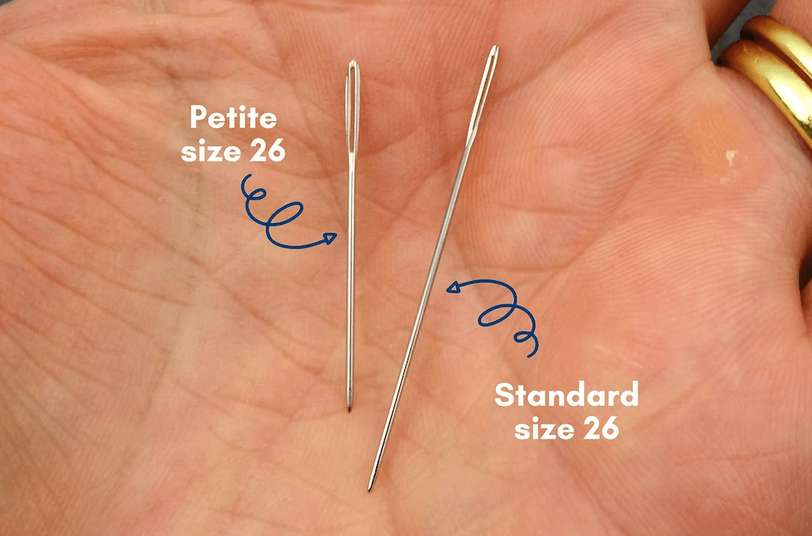
Lord Libidan is a lot better about doing things the right way than I am, so I read with interest his post about petite cross stitch needles and when they might be useful in projects. The difference between regular and petite tapestry/cross stitch needles is down to the size, of course, which he explains, and in particular mentions the needles being less likely to enlarge the holes in your fabric as one reason to use them. 

They also can be easier to stitch with, especially id you have small hands. 

But they can also be harder to find, more expensive and harder to thread than standard sized needles. 

It would probably be worth it for you to seek out a petite needle in the size you most commonly use if you’re having problems with holes in your fabric when you stitch, but you probably won’t want to use them all the time. 

Check out the post at Lord Libidan for a lot more details (and also this chart about what size cross stitch needle to use if you have no idea where to start). Little details like that can make a big difference in your enjoyment of stitching and the end result. 

[Photo: Catkin and Lillie, via Lord Libidan]
«
»

Have you read?

How to Add Text to a Cross Stitch Project

One of the easiest ways to make a cross stitch project more personal is to add text to it. Whether you’re adding the names of people getting married to a generic floral cross stitch design, birth information to a project on theme with the new baby’s room or just adding a word or phrase that’s meaningful to you, adding words to cross stitch projects make them that much more special. 

But if you’re not working with a project that already has text built in, or you want to change the text that’s there, that can feel a little daunting. 

Caterpillar Cross Stitch has a great guide to adding names and words (as well as numbers) to projects, which talks you through what to consider and how to actually go about adding text to a cross stitch project successfully. 

You’ll need to think about what kind of font you want to use and if you’re using back stitched letters or larger filled letters, how much space you need and how the letters work together in the text you’re planning to make sure it’s readable. 

Their post includes common pitfalls such as running out a space or ending up with text that’s off center and how to avoid them (spoiler: chart out your text before you stitch!). 

The whole post is really helpful if you’ve never added lettering to a project before and don’t know where to start. I like to use block letters in back stitch when learning how to add text to cross stitch, but of course there are tons of lettering options. Check out this collection of cross stitch fonts if you want to see some different things you can try. 

And head over to Caterpillar Cross Stitch to get more tips for how to successfully add lettering to your cross stitch projects. They also have their own alphabet and number charts you can buy to add text to your stitching. 

Have you ever added text to a cross stitch project? I’d love to hear how it went!

[Photo: Caterpillar Cross Stitch]

Categories

Book Reviews Christmas Craft Businesses Craft Inspirations Craft News and Events Cross-Stitch Patterns & Charts Cross-Stitch Product Reviews Cross-Stitch Website Reviews Dogs & Cats Easter flowers Free Patterns Halloween More Cross Stitch Product Reviews spring Subversive Thanksgiving Tutorials and Patterns valentines day

RSS feed: More Articles More Articles

  • How to Create Easy Halloween Art Journal Pages
  • Etsy Feature – Pottery Travel Mug Template Set (3 Pieces)
  • Michaela McMillan: Weaving Stories into Sculptural Art
  • How to Add Text to a Cross Stitch Project
  • Beyond Basic Pumpkin Knitting Patterns
  • The Goldfish by Henri Matisse Advanced Cross Stitch Kit Review
  • Make To Donate: Crochet Chemo Cap Patterns
  • 32 Halloween Silhouette Digital Stamps and Die Cuts
  • 12 Free Baby Booties Sewing Patterns – Easy Fabric Shoes for Newborns & Babies
  • Free Felting Tutorial Friday: Needle Felted Pet Portraits

Pick Your Blog

  • Sewing
  • Knitting
  • Quilting
  • Crochet
  • Home & Garden
  • Recycled Crafts
  • Scrapbooking
  • Card Making
  • Polymer Clay
  • Cross-Stitch
  • Edible Crafts
  • Felting
  • Glass Art
  • Indie Crafts
  • Kids Crafts
  • Jewelry Making
  • Lesson Plans
  • Needlework
  • Bath & Body
  • Party Ideas
  • Candle Making
  • DIY Weddings
  • Not Craft
  • Free Craft Projects

Copyright © 2026 · CraftGossip | Start Here | Contact Us | Link to Us | Your Editors | Privacy and affiliate policy