 I still consider myself an intermediate cross stitcher at best, and I definitely can’t dive that deep into all the techniques that we need to know as stitchers.
That’s why I’m thankful for other cross stitchers with more experience who are willing to share their skill so that the people coming up in the craft can learn more about it and the best way to do things.
I do know enough to know that a lot of people dislike doing back stitching on cross stitch projects. I’m not really sure why, because a lot of times when the backstitch is just outlining something you’ve already cross stitched you’re just using the holes that are already in the fabric, so it’s more tedious than difficult.
Caterpillar Cross Stitch has a great guide to all things back stitch, including why you might use it, why it’s important, how to figure out what the pattern is trying to tell you to do, and how to do it well.
Because while back stitch is often used to outline things, it can also be used to add detail (think a cat’s whiskers), separate colors and add overall depth to the design.
It’s important to know that if a cross stitch design has back stitch, the designer probably did it for a reason and you shouldn’t just ignore it. You should also know that it’s not actually difficult to do, but there are some different approaches you can take.
I never would have thought before reading this post that you can work the back stitching as you go instead of saving it all to the end of the project. This is probably a good plan if you’re one of those people who doesn’t like to do it, so you won’t avoid finishing your project because there’s a ton of back stitch to do at the end.
The post also covers thread management, basic technique (with a video), troubleshooting and options for dealing with diagonal back stitches. Check it out now at Caterpillar Cross Stitch.
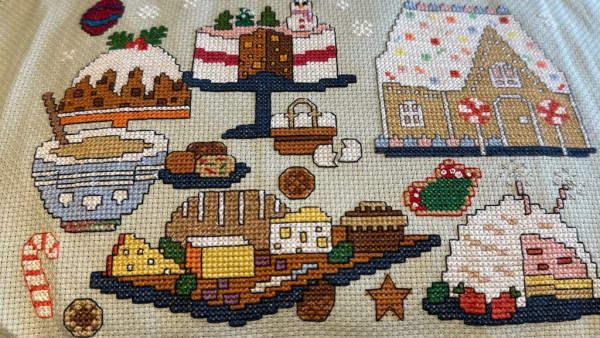
[Photo: Caterpillar Cross Stitch]